Search

what Was, what Is, and what Will Be

I am the sum of what I produce.

Category

Trinidad and Tobago

T&T – Pointe-a-Pierre Peacocks

DSC_3302

When we were last with the intrepid students sent abroad to the Caribbean nation of Trinidad and Tobago, our fearless leader had just successfully wrangled the group into and out of the Angostura Rum Factory (the tale of  said adventure can be found here).  This short, picture filled post will highlight just one of the many fantastic sights that were seen the rest of that eventful day at the Pointe-a-Pierre Wild Fowl Trust.

DSC_3325

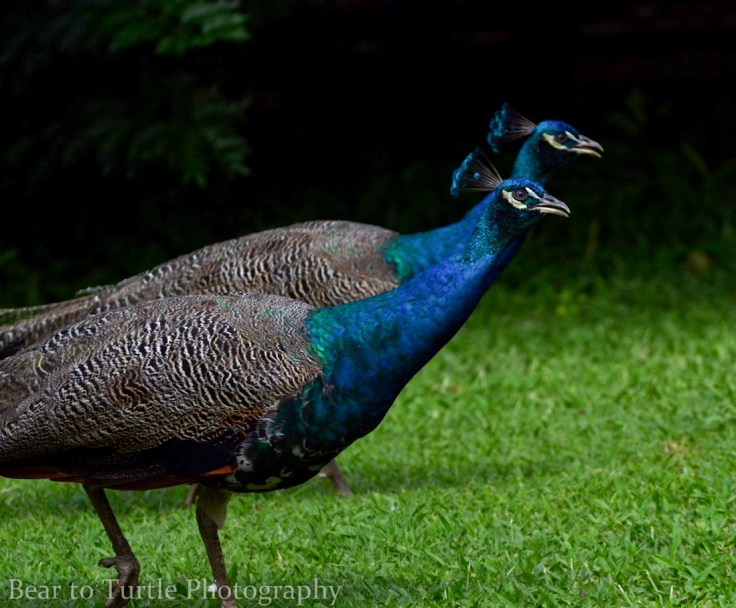
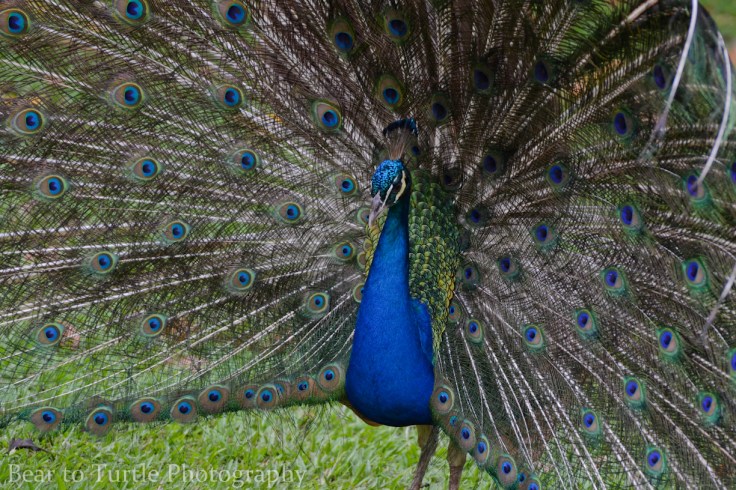
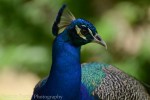
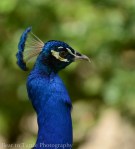
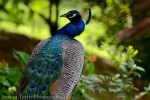
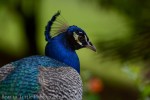
Peacocks (the common name for the male Indian Peafowlbut who cares) are fantastically famous.  Why?  Because they’re blue.  Blue, and they like showing it off.

DSC_3148

Not sad blue, obviously, but the best color in nature, in my opinion.  I’ve discussed my love for blue previously, but blue in birds is especially unique.  Unlike blueberries and other plants whose colors are derived from chemical pigments, the blue in feathers, both iridescent and flat, come from physics.  Without getting too technical, mostly because I only half understand this magic, the light that hits a feather on a peacock strikes a barb (a feather shard, basically), bounces around a bunch in little air pockets of particular shapes, cancels out the other colors in the light spectrum, and reflects only the blue wavelengths of light out to your eye.

DSC_3299

Cool, no?  It’s a pretty little mirage that plays merry hob with your senses to create BLUE, in every sense of the word.  For more information, Cornell has a nice easy thing to read here, and Yale has a less easy thing to read (but it’s got pictures) here.

DSC_3169

I could say something about the mating implications of the beautiful plumage seen in these pictures, but I’m not going to.  These particular individuals were not wild, they weren’t being bred to be released or to increase populations, they were mostly just there to hang out and be charismatic megafauna.  Regardless of the reason for the display and for the color, I had a great time taking a ton of pictures.  So now, I’ll shut up, and put up the rest of the images.  Enjoy!

DSC_2479

Ducks, In Trees!!!

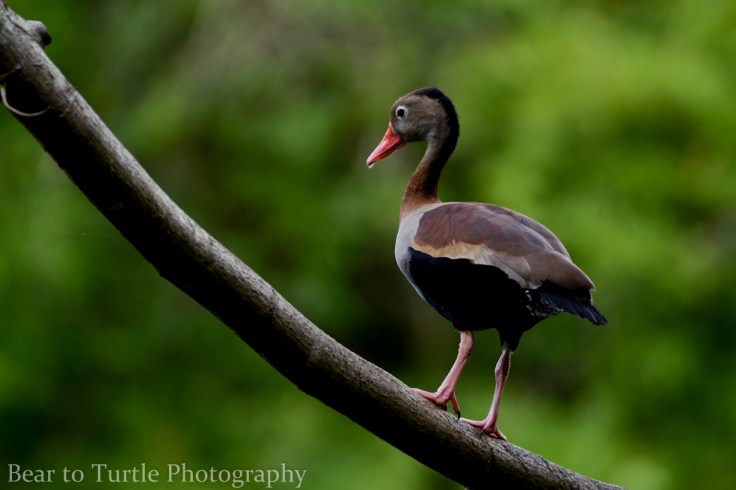
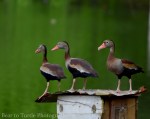
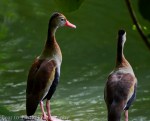
DSC_3218-2These gregarious guys are Black-bellied Whistling-Ducks, Dendrocygna autumnalis.  I’ve seen them a few times, and on each occasion, I had to check to see that I wasn’t going nuts.  After my internal double takes finished, I came to the conclusion that I was indeed seeing what I thought it was that I was seeing.

Ducks.  In trees.

This doesn’t seem like a particularly odd sight until you think about it for a second.  So do that.  Think of a duck.  Now, what did you just think of?  Maybe you thought of a flock of floating things swimming all in a row, maybe dipping their heads under the water to get a nibble to eat, maybe you thought of a squat little things huddling on shore, or if you’re a hunter, maybe you thought of a pair of flapping wings hauling tail from lower left to upper right.  But did any of you think of a duck, in a tree?

Well, maybe you did.  Wood ducks, which are pretty common in North America, also hop around wooded areas, and for a good reason.  Would you rather have your babies all exposed on the ground where the nice predators could come eat them the moment you waddle away to go pay a phone bill, or would you rather squirrel them away in a cavity nice and high up in a tree trunk so the salivating mean carnivores would let you run your errands in peace?

If it was me, I’d be up a tree.

I still think it looks weird.

Simple Contentment

Five At a Time – Buzzbirds, Food, and Flower Sex

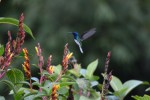
These brightly colored buzzbirds, White-necked Jacobin males to be specific, were spotted at the Asa Wright Nature Centre in Trinidad  They spent most of their time in the air chasing each other away from the bushes and out of each others presumed territories, but when they did pause for a brief second, they received a lick of nectar in return for carrying some pollen to the next flower.

A great system to watch, if you ask me.  I could have stayed there for weeks.

Remembering a Calm Place

T&T – School field trip to the rum factory? Yes, please.

As one might expect, taking college students to a rum factory is akin to throwing a bunch of children into a candy store that has unlimited free samples and abandoning them for a bit while you go read a book.  OK, it wasn’t that chaotic, but you see the potential.  The morning was actually filled with a lot of learning, with topics ranging from the history of the factory and the process of distillation to a brief foray into, oddly enough, a large rare butterfly collection.  Since I took notes on what the guide was saying (surprise), here’s a brief synopsis of the tour.

The House of Angostura produces a wide variety of rum types including light, golden, and dark as well as fruity punch mixes and the ever powerful puncheon rum.  These drinks are not widely distributed outside of the country, if at all, but the most famous export from this distillery are the Angostura bitters.  The company is nearly 200 years old, with roots that go back all the way to a German Surgeon-General by the name of Dr. Siegert traipsing around the Venezuelan jungle.  By 1824, he had developed a remedy for stomach aches and other digestive issues that had been plaguing soldiers in the country.  These bitters are made from a secret concoction of herbs and spices collected from Venezuela which are shipped to England to be sorted and ground together (called marrying), then shipped back to Trinidad, percolated with alcohol to extract the flavors and chemicals, mixed with sugars and other flavors, then let sit for a period of time to concentrate.  The final product has been used as a general health tonic, an addition to the quinine-delivering tonic water, and most commonly as a mixer in cocktails.  The Angostura bitters with its iconic packaging, a small bottle with an over-sized label, is a staple of bartenders all over the world.  Check out this clip discussing the great bitter shortage of 2009.

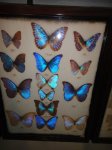
Among the sights at the distillery is a huge museum of over 8,000 butterflies from all over the world.  This collection was  bought from its owner to be kept by Angostura for the people of Trinidad and Tobago.  A very odd, but very cool, addition to the tour.  A walk and a trolley took us through parts of the distillation process, to the receiving areas for the molasses which is shipped in by the tanker load (oh man, did that smell great), and to the Rube-Goldberg like bottling plant.

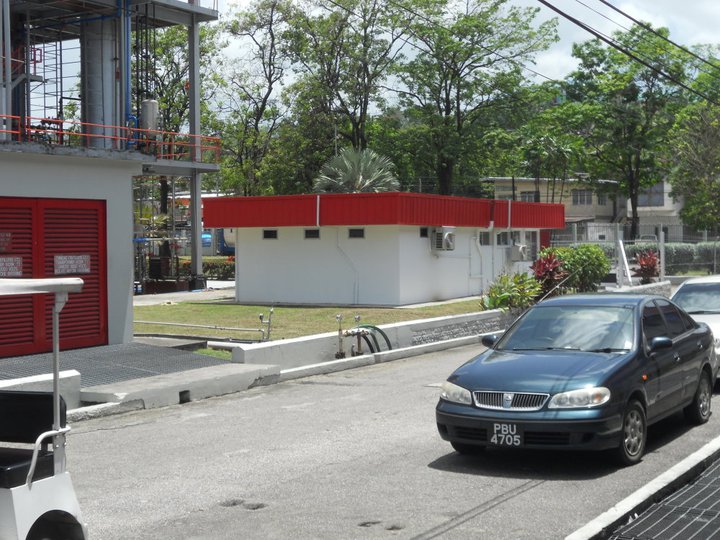
We were also reminded that Trinidad is a former British colony, as the House of Angostura holds a “royal warrant”, which is “the prestigious distinction awarded by royal grace and favour, to firms whose products are excellent and of the highest standard of quality” according to the Angostura website.  The distillery was visited by Her Majesty Queen Elizabeth II in 1985, but she did not use the special lou that was constructed just for her (the red roofed building below).

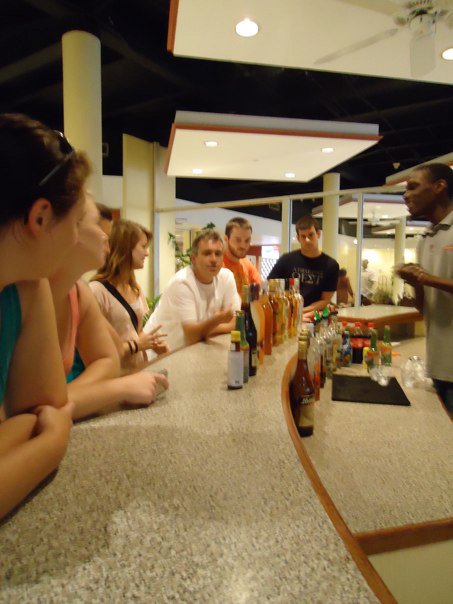
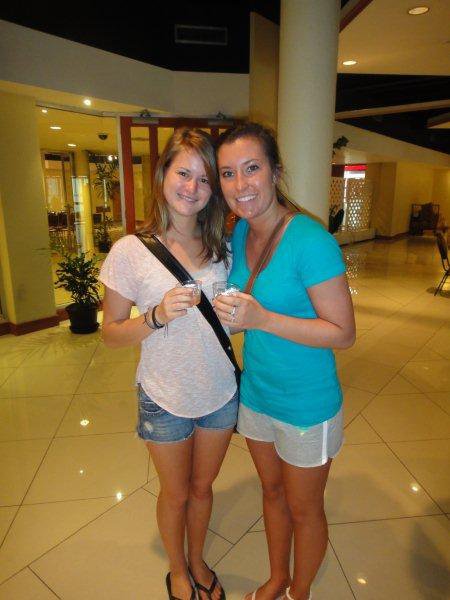
After the tour, we were given a chance to taste all the wonderful products that we learned about that day.  Needless to say, it was a good time.  The last stop was the gift store, where a large supply of potential good times was secured by the students for the rest of the trip.  Once the stragglers were coaxed out of the shop, we got some food to go, and were whisked off to our next destination, the Pointe-a-Pierre Wild Fowl Trust, more on that in my next installation.

Thanks again to the students for the pictures, I evidently was saving my snap happiness for the afternoon’s bird filled festivities.

T&T – And who goes to Swamps, anyway?

I do, because they’re awesome.

The technical definition of a swamp is really just a wetland that is dominated by woody plants.  Nothing mystic, nothing scary, just a bit of water and a bunch of trees.  Many people may assume that our jaunt to what would be the first of two swamps we would visit in Trinidad was not pleasant, filled with giant mosquito bites and snakes dangling from trees waiting to snatch up the smallest of the unsuspecting adventurers or such ilk.  Reptiles tend to blend into the deep green and brown that permeates the dense vegetation that exist after the edge of the main water channels, so despite the estimated density of 11 tree boas per square kilometer found by these nutters who actually count that sort of thing, we didn’t see many snakes or caiman on this trip (not that they didn’t see us…).  Those fears of swamp monsters and horror stories shown on TV don’t always apply to real life, and to be honest, there were more biting bugs at the beach than there were at the swamp.  And anyway, I was more interested in the charismatic megafauna.  You know, the birds.

The Caroni Swamp sits on the west coast of Trinidad where the Caroni River empties into the Gulf of Paria, the body of water between Trinidad and Venezuela.  This large patch of islands and water has been set aside for over 50 years in an effort to protect Trinidad’s national bird, the Scarlet Ibis.  Conservation efforts such as this, which specifically stops Carnival costumes from being made from wild bird feathers and from tourists like us from tromping in willy nilly and scaring the crap out of the beasts, have boosted this population to between 10 and 30,000 individuals.  That is what charismatic megafauna can do for a habitat.  If something is rare but pretty, people care, habitats get preserved, and thus the species itself gets a boost.  The charismatic character of this particular bird comes from its bright red plumage which is developed in similar manner to flamingos, via its diet of algae and crustaceans, but the birds in this particular region have one more striking aspect to their life.  These bright birds migrate daily from Venezuela to Trinidad, making a spectacular group return to the swamp each evening.

It is this sight that drives most of the ecotourism in the area, and this is that we had come to see.  We got to the swamp about an hour before dusk and made our way to the wide boats and Winston Nanan, who would be our guide for both this and our second swamp tour later on.  Winston and his son are very interesting people, with whom I’m very happy to have had the chance to meet, but I’ll get back to them when I talk about our adventures in Nariva.  The boats took us into channels between islands cut into the swamp by both man and nature, weaving through the tight knots of vegetation that is typical of a mangrove swamp.  The different types of mangrove shrubs (reds, whites, blacks, there’s over 100 species, so I’ll make this short) serve different functions in the swamps, from maintaining land and building new land, to providing habitat in both saline and fresh waters, all depending on the biology of the species.

All this culminated in a spectacular collection of trees with an unceasing diversity of wildlife contained within.  By dusk, our boats had been positioned on the opposite side of a large lagoon from a big roost holding thousands of birds making dots of pink, blue, and white against the dark green of the mangroves.  The ibises came in Vs, with young and old sporting different patterns of pink and black, all with the signature long curved beaks that are so good for fishing shrimp out of the mud.  Cormorants, herons, egrets, bitterns, and the ibises all made their way back to the roots for the night, in spectacular form, both visually and audibly (just like students, those buggers are noisy when you get a bunch together!).

After we’d spent quite a bit of time sitting quietly so as to watch but not disturb the nature, we gently made our way back to the dock and then again back to Pax, hopefully with a different view of what the mystical “swamps” are all about.

T&T – It’s raining in the Tropics, and the whities go to the Beach

From the sounds, to the smells, to the feel of the wind, mornings are different when it’s raining.  As it often happens in the Tropics, it was raining that morning, which meant less birding but more subdued chatting with the muted din of the downpour in the background.  After our night of Penultimate Frisbee, food, and post-dinner card playing merriment, I was happy to see that all the students looked tired but alive, and each eventually made it down to breakfast.  It’s always a good start to the day on a study abroad when your morning head count confirms that you haven’t managed to loose any students during the night and that the only things broken were a few pint glasses.
Our plans for the day were to go to a beach and to a swamp.  Despite the weather and the dubious looks from the students that expressed questions such “as are we really going to the beach while it’s raining?” and “who goes to swamps anyway”, we made our way down to the bus and headed up and around the mountains.  Trinidad’s Northern Range runs east to west along the majority of the top of the island, separating the heavily populated corridor that is between Port of Spain and Arima with the northern coast and the Caribbean Sea.
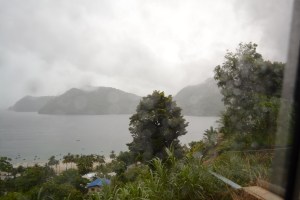
Interestingly enough, a number of roads in this area were developed in part due to the cooperation between the United States and Great Britain during World War II.  The “Destroyers for Bases Agreement” signed in 1940 facilitated the exchange of UK controlled land for American warships to aid in the war effort.  In Trinidad (which was still a crown colony until 1962), this led to the construction of two US Army Air Force bases and a number of Navy stations along the northern coast line.  The roads we traveled on that day were in part an effort to connect the Air Force and Navy installations on the island.  This may be trivial to most, but I was struck by the influence the rest of the contemporary world had on this seemingly distant island, slave trade and colonization aside.

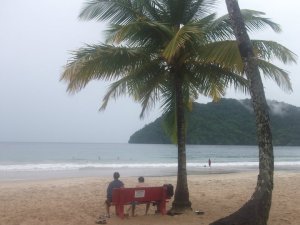
I’m glad those roads were in fairly good shape, because those mountains were beautiful but windy.  I thought we had gone through some interesting switchbacks to get to Pax, but this drive was even more spectacular with cliff faces to once side and the sea to the other.  Each turn brought us above another cove cut into the coast, all filled with golden sand and olive green trees. We glimpsed our destination of Maracas Bay before we got there, giving us a chance to anticipate the beach, set back deep into the coast and protected from the strong currents that plagues many of the other northern beaches.
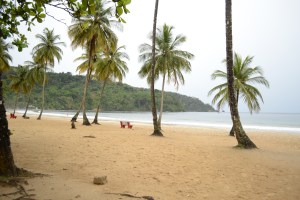
We finally got down to the sand and surf, and it was still drizzling slightly.  Fortunately, that meant that the beach was completely empty except for us whities.  We donned our ever needed sun tan lotion just in case the sun decided to shoot its rays through the clouds (it did, this day was the start of some persistent sunburns) and headed straight in.  I’ve been lucky enough to swim, or at least wade into (the North Sea is damn cold), two oceans and two seas throughout my travels, and my second jaunt into the Caribbean lived up to its reputation of being bath temperature warm, so salty that you hardly have to work to float, and so beautiful that you don’t ever actually want to get out.

Everyone spent a long time swimming, bobbing with the waves, and body surfing (who needs a board when you’ve got prefect surf that takes you from a few hundred yards out right to the sand with only a few well timed strokes?), and then it was time for some Penultimate Beach Frisbee.  Same rules, same players, more epic and gratuitous water layouts for the disc.
After we had had our fun in the (still not any) sun, we headed to the food vendors that contribute to this world famous beach for some lunch which included Bake and Shark.  Instead of writing more (I’m proud of you already for having stuck around to get to this point in the post), I’ll attach a video here so you can see what it is, as we were too busy eating it to take any pictures.  Although I did try a bite of it, I had the veggie version which substituted the deep fried shark for cheese, but still wrapped in the fry bread with access to the choose your own adventure of condiments available at the stand.  Really good…

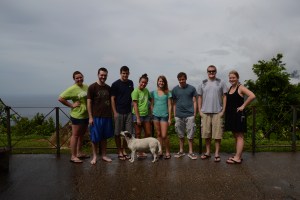
The drive back through the mountains provided the views you see here.  Unfortunately, the candy and food stands that normally were at the scenic overlook we stopped at weren’t there that day (can’t imagine why, the rain had just cleared when we got there and it was still fairly cloudy), but we got to walk around and take in the stunning topography of the Northern Range.  The group picture is missing two students (Chase and Nathan) as well as our fearless leader, but from left to right the students are as follows – Abby, Chris, Josh, Brittaney, Kloe, Joe, Derek, and Chelsea.  I don’t know the name of the friendly pup.

Next, on to our first swamp tour.  But first, group nap!

Blog at WordPress.com.

Up ↑

Cedar to Hyssop

Reflections on adventures from Africa to Alaska

Artist Daniel Mackie, Artist behind The DM Collection

Exploring the animal kingdom from the perspective of art, folklore and mythology

Let's Paint Nature!

Christine's Sketchbook

Hanna Hasse Lilja

Swedish skull art

Civic Leaders Center

Located in Briscoe at Indiana University, the IU Civic Leaders Living-Learning Center is comprised of diverse students dedicated to leading for the greater good.

Little Nashushí

My Adventures in the Pacific Northwest

The Scrub Blog

Nature and Science from Florida's Heartland

this is... The Neighborhood

the Story within the Story

Nita Eats

savoring life bite x bite

MesAyah

Melodic hiphop meets deep reflections about life and death

Frank J Casella Photo Blog

Sharing photos and thoughts about hope and God's love in the world.

My Food And Flowers

Two of the Great Joys in Life!

A Good Blog is Hard to Find

I will shatter a word and scatter the contents into the wind to share it with the world.

Bucket List Publications

Indulge- Travel, Adventure, & New Experiences

stuart allan hyde

PHOTOGRAPHY