 This is a Barking Treefrog (yes, it does bark, sort of… click the link to learn more and hear the sound). As if that wasn’t cool enough, the little fat dude can change color. Scroll through the slideshow below to see how the same frog goes from brown speckledish on pavement to bright green on a palm leaf, all in less than 15 minutes. Super cool (and super green).










 Check out this little dude or dudette! Pretty small, right? And although I said “Baby Gopher Tortosie” in the title, I may have lied slightly. Tadaaa!
This hatchling is probably about two years old, a toddler by human standards. How can we tell? Just like a tree, we count its rings!
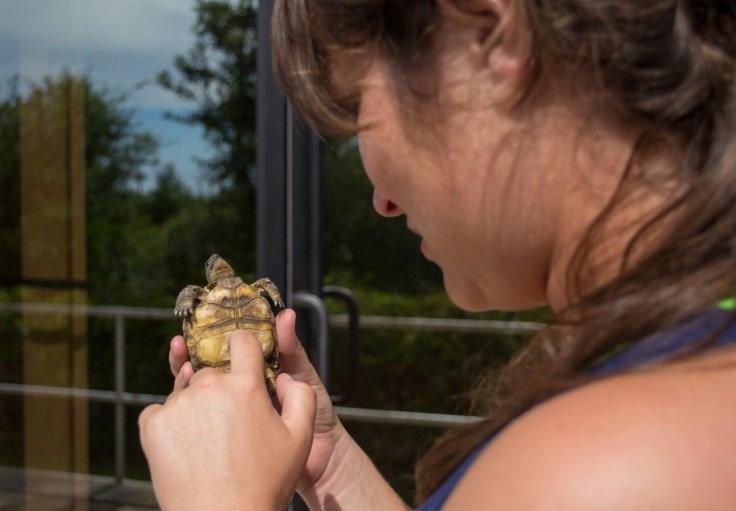
Livvy Jones, one of the summer interns here at Archbold, is counting the scutes on the tortoise’s plastron. That’s the fancy way of saying that she’s counting the plates on the tortoise’s stomach shell. Each scute represents one year, starting with the birth year, year “0”.
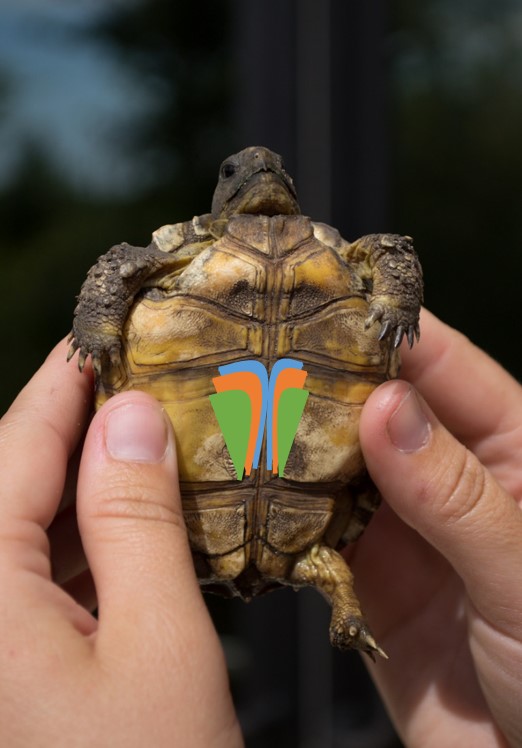
In the picture above, you can see the individual scutes that are made of keratin, the same material that makes our fingernails. I have highlighted the corners of two sets of scutes to show how they are counted. The green one is the oldest, and is the shell plate that the tortoise was born with. The orange one represents the first year of growth, and the little Gopher is currently working on growing the second year in the blue area. That means that this tortoise is roughly two years old!

You can also see these growth rings on the carapace, the shell on the tortoise’s back, before they get worn down as the tortoise ages. Considering Gopher Tortoises have been found to have a life span of greater than 50 years, this one has got a lot of life ahead of it! Thanks, Livvy, for showing us this neat little guy!
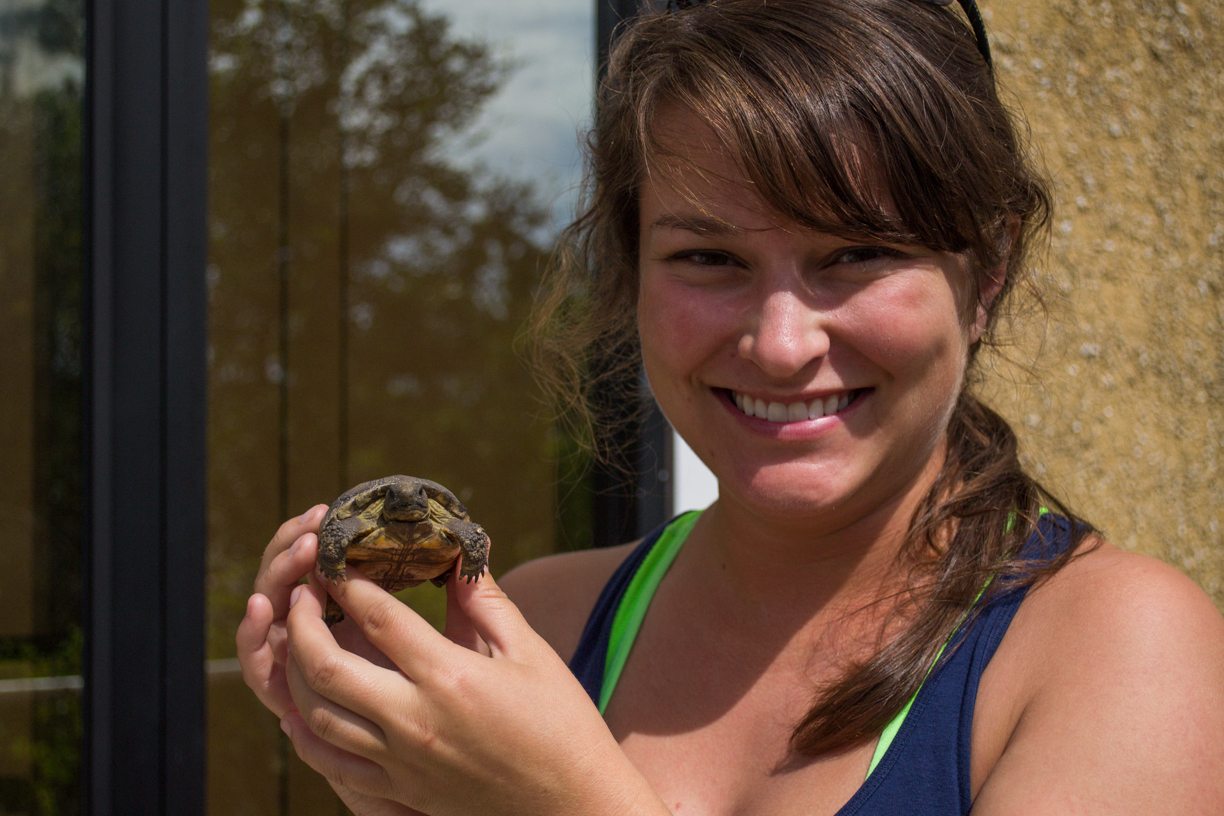
And don’t worry, folks, once we were done learning and taking some quick measurements (the researchers here do have permits and permission to handle this unique and protected species), we released it back right where we found it.
 Sounds like a disease, looks like a firework, but is actually an Aster. Unlike other plants in this family, i.e. sunflowers and daisies, Feay’s Palafox only has one type of flower instead of two.
Think of a sunflower. The few, but showy, yellow flowers around the outside are all individual ray flowers. The more numerous, but drab, brown circles in the middle are all individual disc flowers. Imagine plucking all the yellow bits off, just leaving the brown bits in the middle. That’s kind of like what Feay’s Palafox is, just the middle disc ones. Not as eye catching, kinda weird and pointy looking, but pretty neat, eh?


 Have you ever seen a bird with a plastic band around its leg? Ever wondered how the band got there, and what it is? Well, now’s your chance to find out!
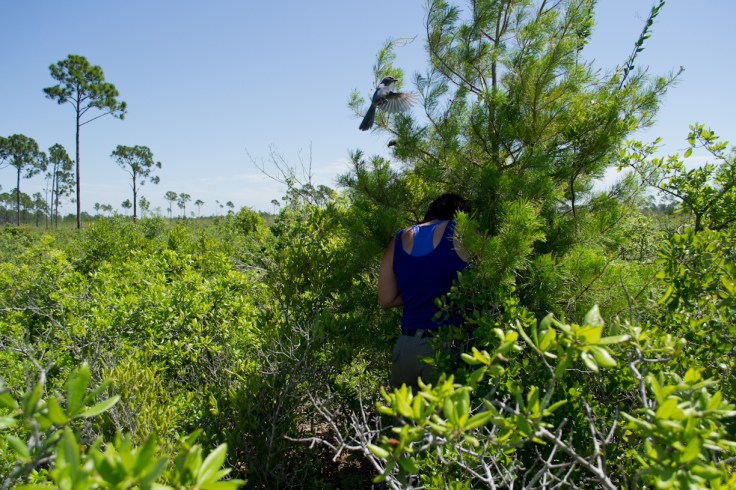
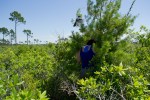
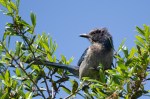
A few weeks ago, I had the opportunity to shadow a few of the Bird Lab interns and their boss out on a Day 11 banding morning. The Florida Scrub Jays here at the Archbold Biological Station have been studied in great detail for 45 years. One of the most crucial steps in understanding family size, life history, territory development, and anything else they want to know about birds is to be able to identify the individuals.
Since Scrub Jays have unique, but fairly similar, coloring, every bird gets its own set of leg bands; a silver one from the U.S. Fish and Wildlife Service, and a set of colored plastic ones from the Bird Lab. Below, you can see a USFWS band, as well as an adult with dark and light green plastic bands along with the silver metal band. The order of the bands, from top to bottom and right leg to left, tell us the identity of each bird on the Station quickly and from a reasonable distance.
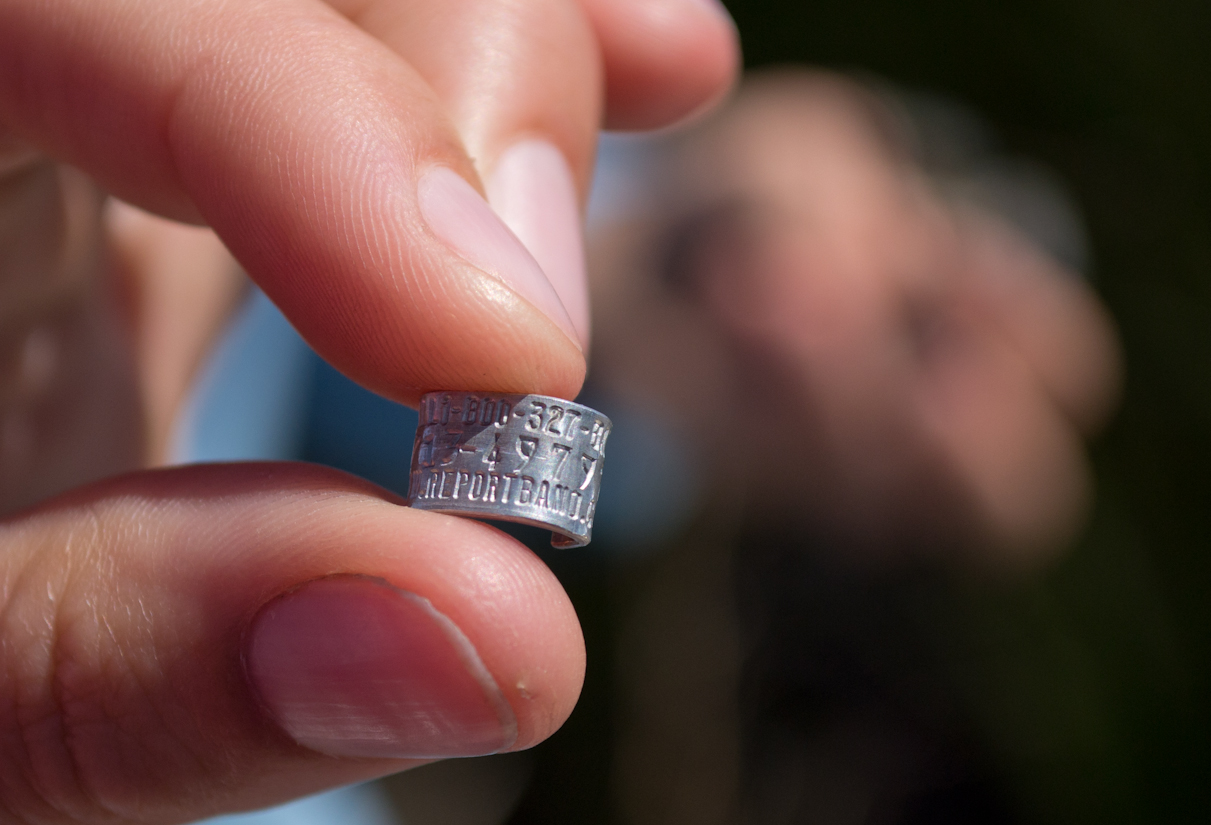

The US Fish and Wildlife Service, in conjunction with other smaller agencies such as Archbold, band birds to gain insight on migration patterns, ranges, life histories, and land use habits of a lot of different types of birds all around the nation. More information can be fond here.
So that’s what the bands are, but how do the bands get on the birds?
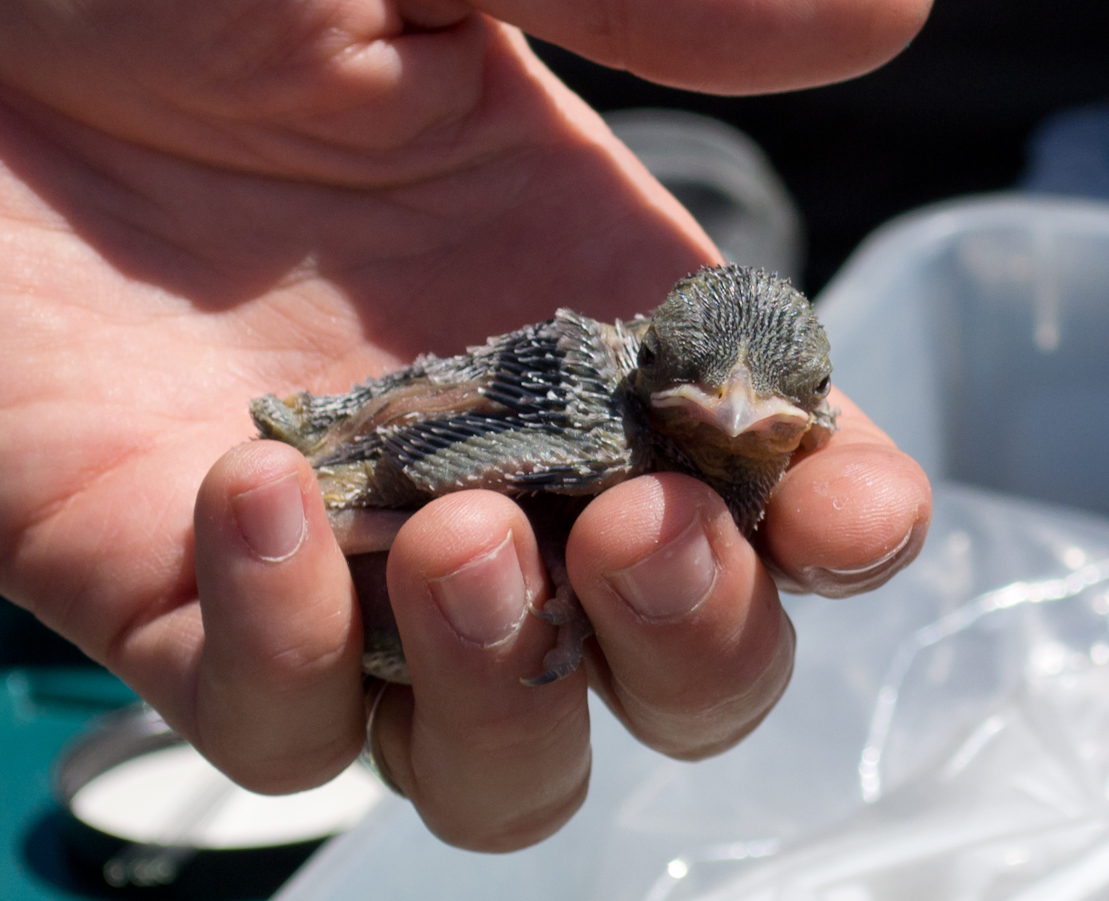
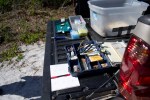
Baby Scrub Jays have a very hard life. There are many things working against the little ones during the first few weeks after they hatch, but if they reach the age of 11 days, they get a visit from some very well meaning and devoted researchers. First, the babies are carefully taken out of their nest, under the ever watchful eyes of their parents, and brought the short distance to the mobile banding station (i.e. a bed of a truck).
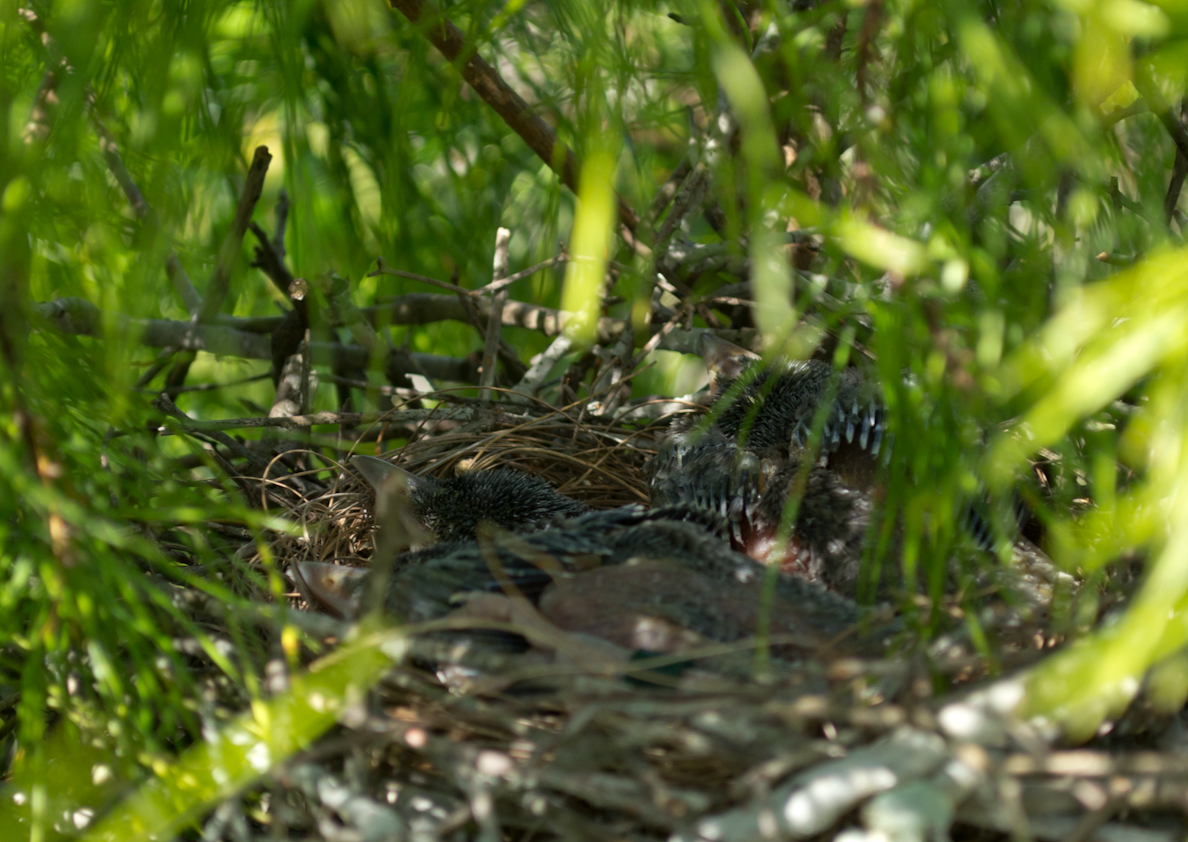

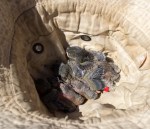
Next, the researchers go into a well scripted dance of measurements on the biggest baby, while the other chicks chill in shade in their portable nest / hat. Shane, the guy seen here handling the birds, starts by drawing a small amount of blood from just underneath the wing. Some of this is processed in the lab to look at the health of the baby, and the rest is sent to the Cornell Lab of Ornithology, which then determines the sex of the baby.
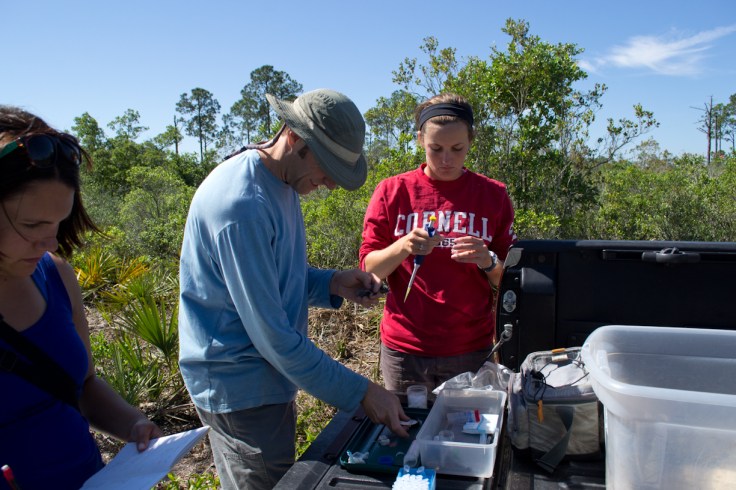
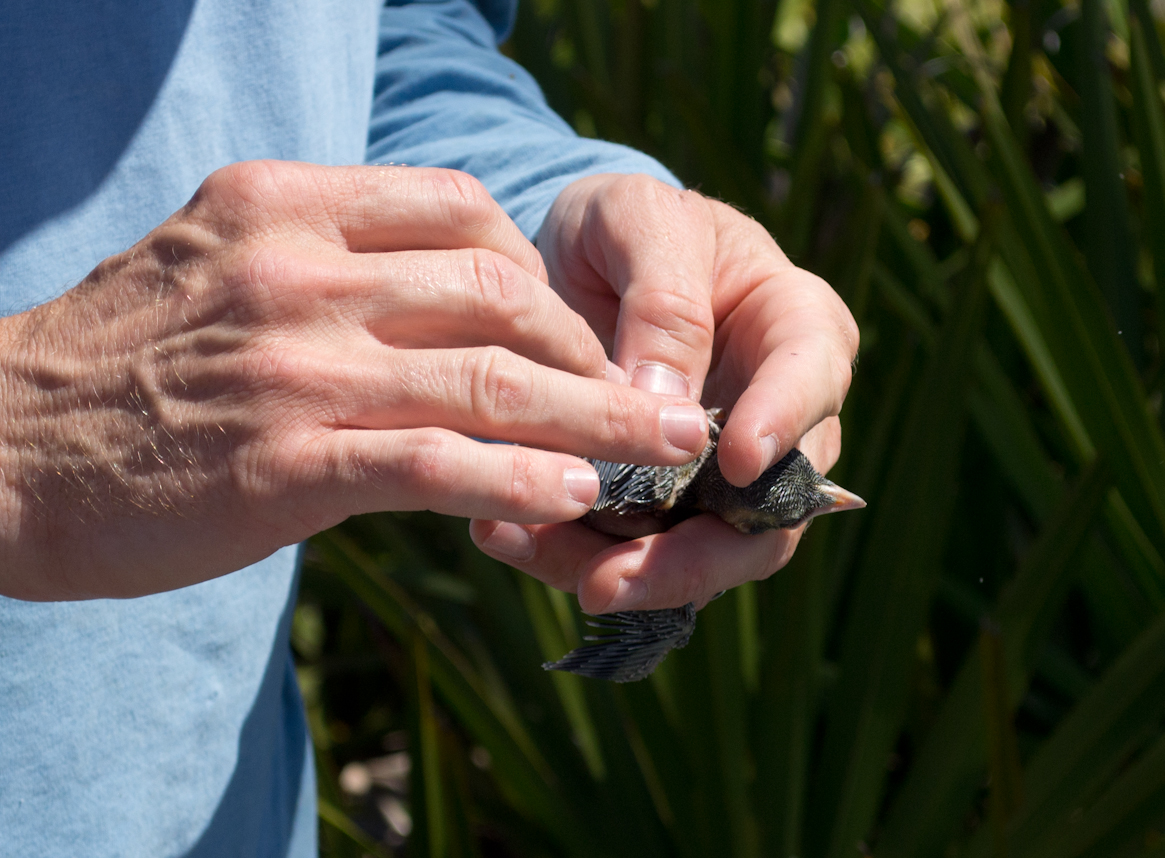
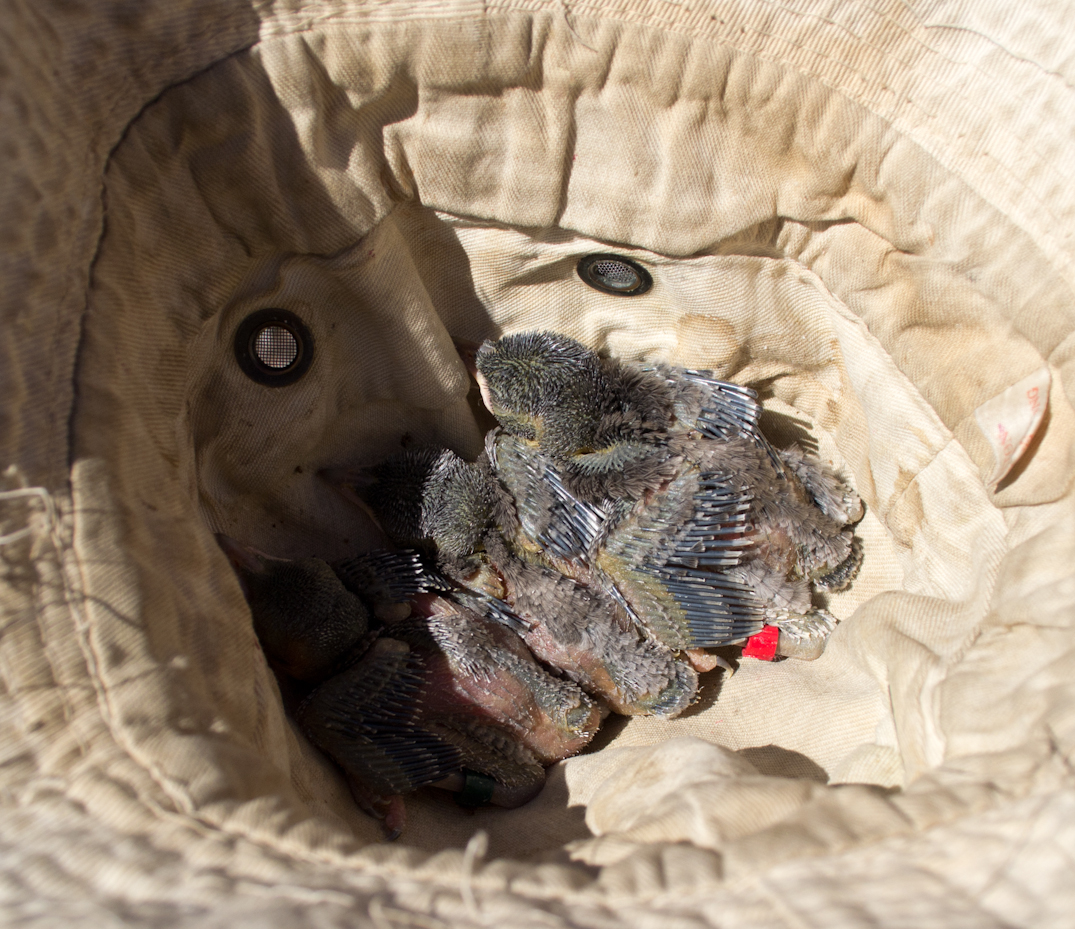
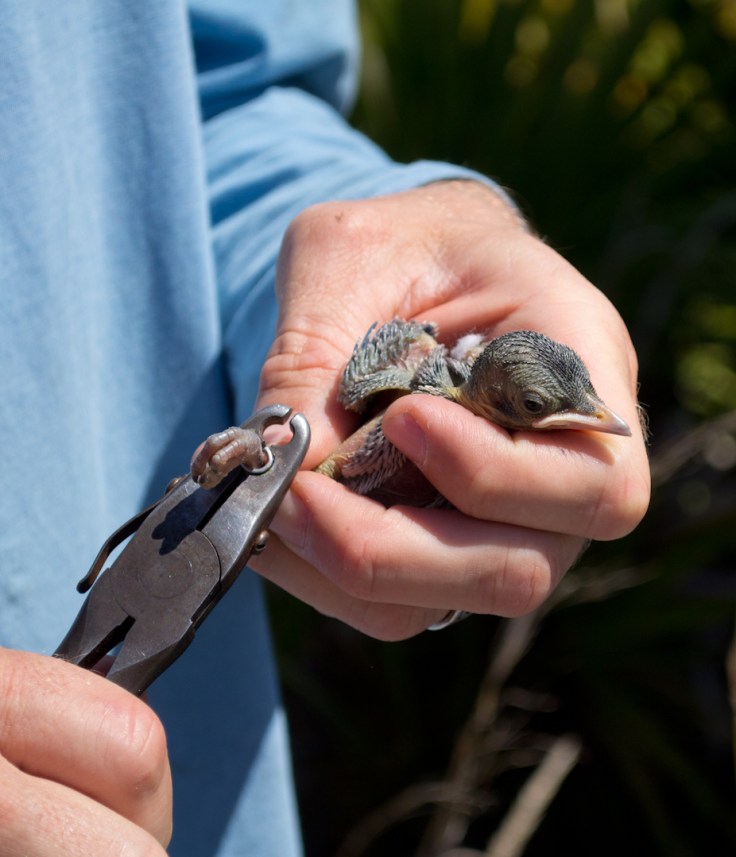
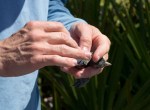
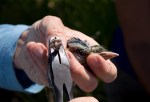
The birds then get banded with their unique metal and colored leg bracelets, carefully squeezed on with the skilled use of special pliers that only allow the bands to be set loose enough so that they won’t bother the birds as they grow older. If the birds survive for 75 days, they get another set of colored bands that are completely unique to each individual.

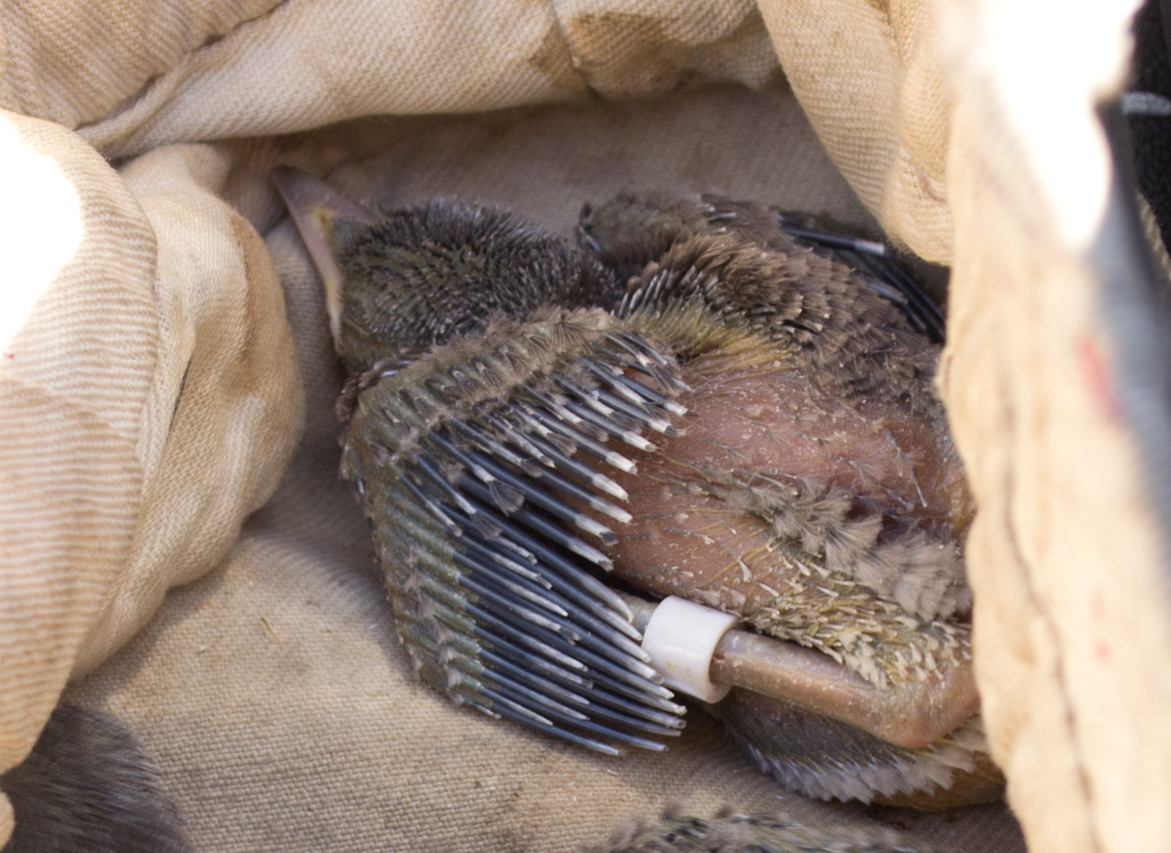
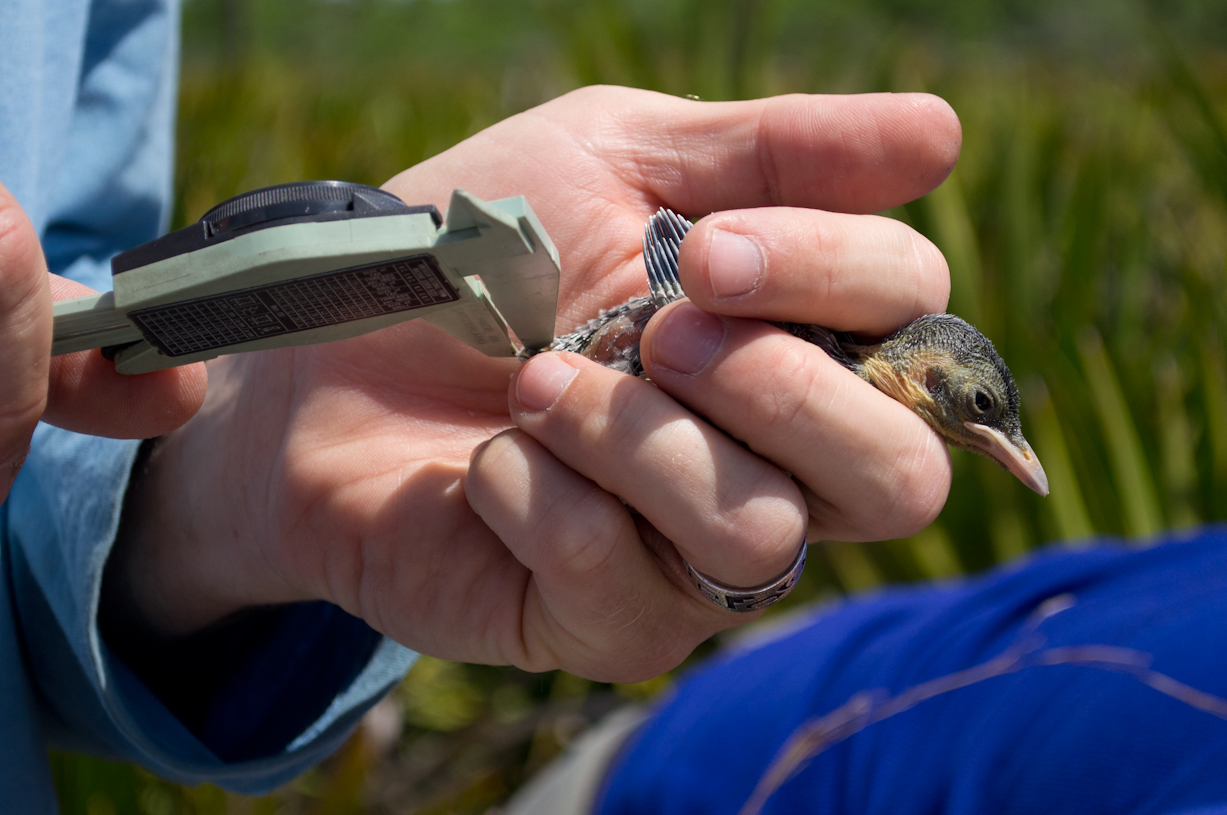
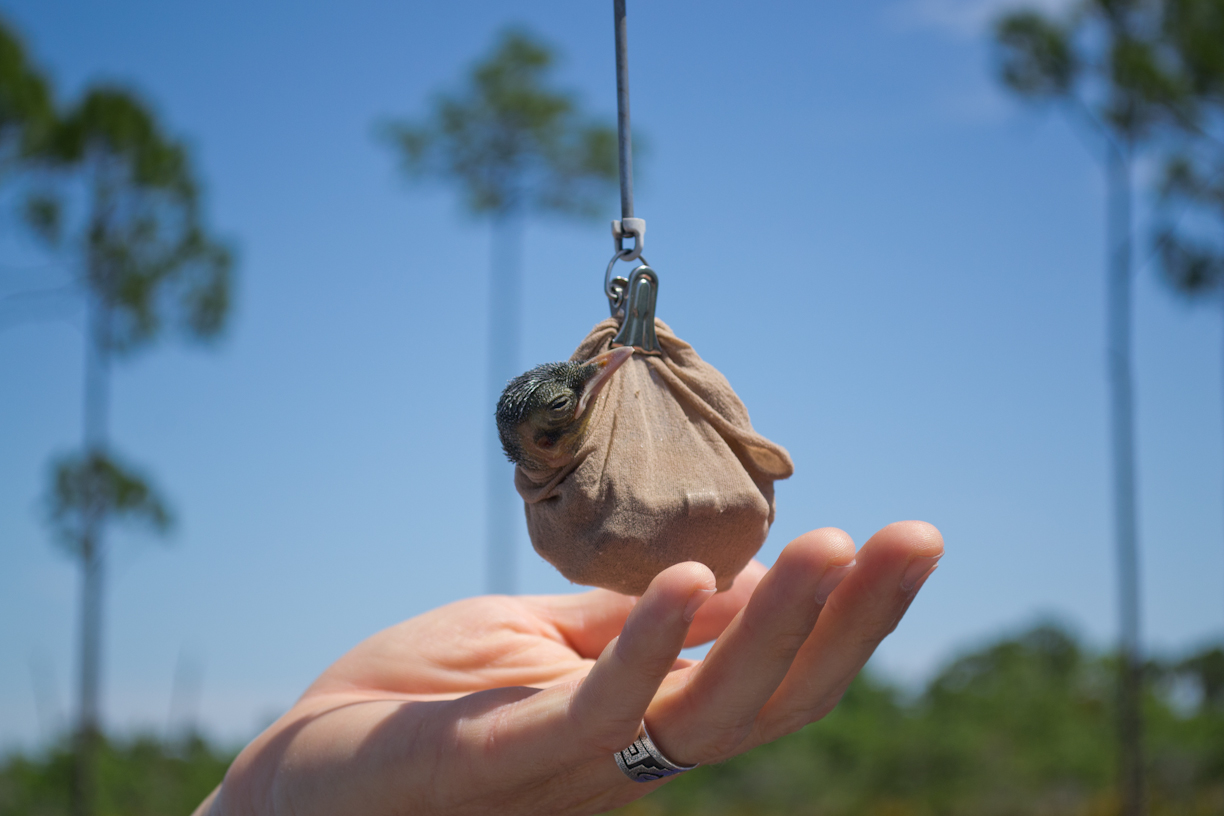
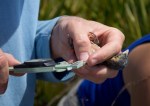
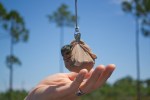
Shane then measures the length of a leg bone, a wing feather, and the tail. The little bird also gets gently swaddled in a pantyhose (seriously, I’ve seen pantyhose used for so much science…) with the hose hammock clipped to a scale to get a weight.


After all this is done, the little ones are gently placed back in their nests, to be reunited with their ever watchful parents.

All monitoring, handling, and research associated with the Florida Scrub Jay at the Archbold Biological Station has been completed under the appropriate permits required to work with this federally threatened species.











 what Was, what Is, and what Will Be