Search

what Was, what Is, and what Will Be

I am the sum of what I produce.

Author

bctuck

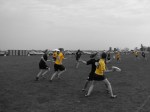
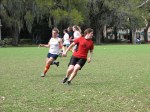
T&T – Penultimate Frisbee

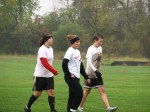
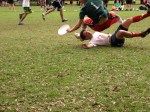
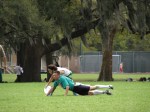
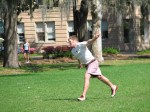
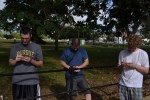
To start, I must unfortunately preface this post by saying that as far as I know, there were no pictures taken of the events I am about to describe.  This is a shame, because we were awesome.  Overheated, sweaty, occasionally uncoordinated, but awesome.  The sport I’m referring to was aptly named…

Penultimate Frisbee.

In regular Ultimate Frisbee, or simply “Ultimate”, seven players line up on each end of a rectangular field just inside their respective end zones.  The frisbee, the disc that is to be thrown from player to player, is then pulled (thrown really really hard) from one team to the opposite team down the field, starting play.   The stationary player with possession of the disc can throw it to any member of their own team, running or not running, in an effort to move the disc from their end zone where it started to inside their opponent’s end zone for one point.  If at any time during play, the disc is caught by the opposing team or even knocked to the ground, the team that did not have possession of the disc at the start of the throw  (previously on defense) now has control of the disc (making them currently on offense) and can pick it up and start throwing it towards their opponent’s end zone to score their own point.  Once a disc is caught by a player in the player’s opposing end zone, their team makes one point, the loosing team walks to the opposite end zone, the disc is thrown to that loosing team and play starts again.

In review, the main rules are no running with the disc, the disc can be thrown from any player to any other player, the disc is turned over to the opposite team if it is intercepted or dropped to the ground during play, no being a jerk, and no touching.  Sound simple enough?  I think so.

The people who play this sport are generally divided between those who like to run long distances and catch things, called cutters, and those who like to sprint short distances and throw things, called handlers.  Each player must be able to play both offense and defense, as the players only leave the field when replaced by a substitute team mate between points.  Generally the play is continuous with breaks only after one team scores and at half time, and games mostly last a little more than an hour to an hour and a half.  Sports such as soccer, track, cross country, and lacrosse use Ultimate’s diverse range of physical activities such as cutting, long routes, short routes, jukes, fakes, stutter steps, pivots, lay outs, hucks, pulls, hammers, and hospital passes, as training tools to hone their athletes into perfect shape.  They don’t call it “Ultimate” for nothing, just ask the guys playing the sport in kilts (a not uncommon sight on the playing field).

However, when you now combine that sport with 8 to 10 hours of walking, sight seeing, and learning to the main part of the day, 80 to 95 degree F weather, sand gnat bites up the wazzu, pointy sensitive plants as the turf grass, fairly constant dehydration, and people who maybe have thrown a frisbee three times in their life, Penultimate Frisbee is born.

If Ultimate Frisbee is the epitome of sport, with highly toned athletes turning well defined skills into effortless excitement, then Penultimate Frisbee is just a step (or two) below that, with out of shape tired people turning newly acquired theories into brief bouts of excitement which are immediately followed by less brief bouts of wheezing and sweating.  Ultimate, to Penultimate, get it?  It’s just like taking a perfectly good sport like baseball and giving bats and balls to fat office workers during their time off, only if baseball involved 15 minute long stretches of constant sprinting and the hand eye coordination needed to stop a flying plate from hitting you in the face.

Needless to say, although we were a rag tag collection of misfits mostly trying hard not to cramp up too much while running (and then proceeding to be disgustingly filthy and smelly back at Pax), we had a great time.  Our pitch was the soccer / cricket field just down the mountain from our home away from home, easily accessible via a system of drainage gutters that made the walk to the games much faster than taking the switch back roads, while simultaneously making the walk back to Pax an arduous nightmare for some (i.e. me), where the hike went straight up the 60ish degree incline and involved the dodging loose rocks and vengeful sticks that often get underfoot.  Penultimate Frisbee became our wind down activity after the adventures of the day where we could use up all our remaining energy before hopefully taking showers and greeting the sweet sweet dinner gong that signaled supper.  I had fun, and I think others did too.

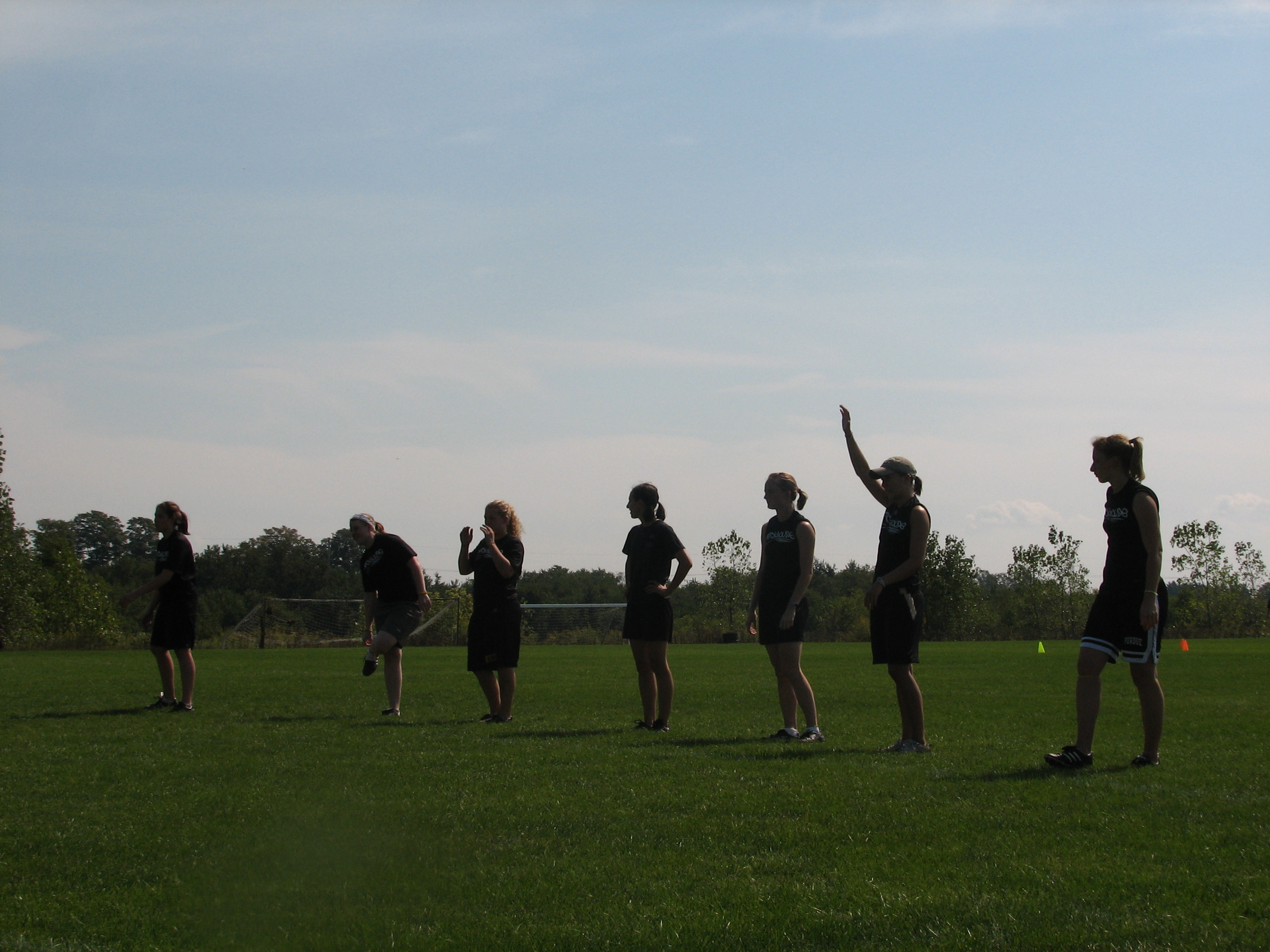
The lesson of this story, ladies and gentlemen, is ALWAYS CARRY A FRISBEE, and you’ll thank me later.  Enjoy the pictures of what college Ultimate is supposed to look like, brought to you by my 6 ish years in the sport.

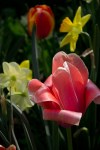
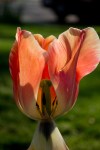
Tiptoe (Through the Tulips)

Sometimes too much of a good thing can be bad.  This is not that time.  When you walk around this garden, lovingly tended by its owners, you get a sense of the endless possibilities that are found in the different combinations of just a few colors.  I had a great time walking through this garden, will you join me in a stroll?   

Ok, so too much Tiny Tim can be bad…

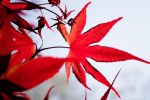
Roses are Red, but so are Maple Leaves.

This week, the theme of the neighborhood is Red (and some Orange).  Not quite as pervasive as the other color changes, but still eye catching none the less.  Next up, Green, and lots of it.


T&T – Buzzbirds, Lopinot, Theobroma cacao, and Bothrops asper (Part 2)

Our first stop near after the museum was to see the two original cacao drying houses which had roofs that completely rolled back off the foundation to expose the rafters where the cacao was laid to dry.  According to the Ghost Hunters episode intro, the bottom part of the drying houses were used as a jail for slaves, but we were mostly told about the cooler parts of the town’s history.

There were still cacao trees around the city, and the students finally got a taste of real chocolate.  Cacao (simply called coco by the Brits, Theobroma cacao by the sciency types, and is where the beautiful chocolate comes from) is hard to describe.  What we think of as “chocolate” is a far cry from its original form.

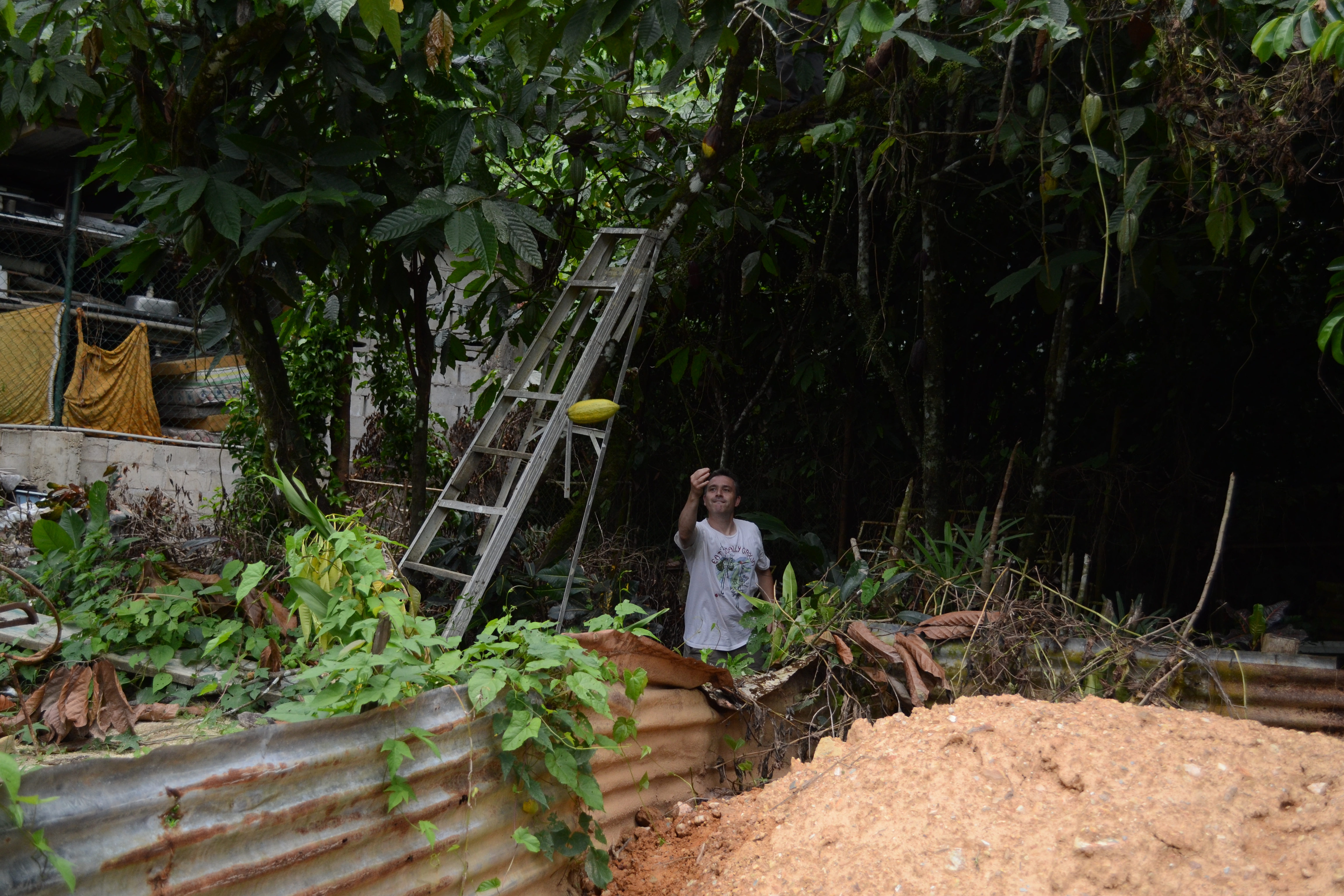
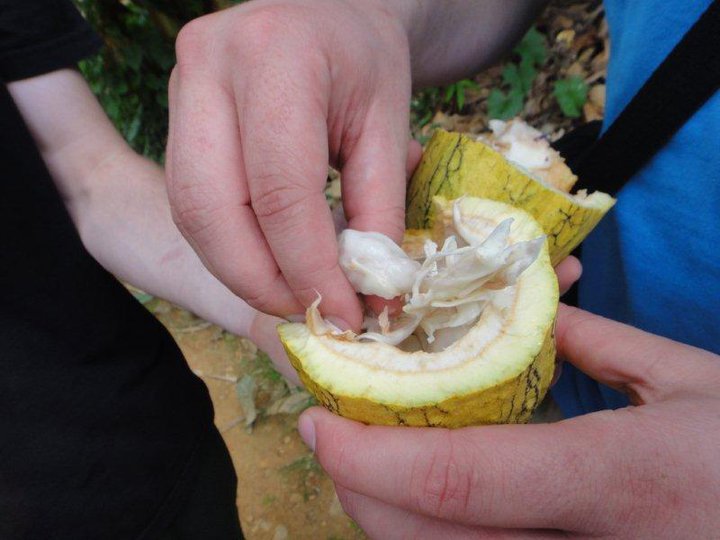
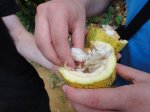
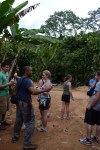
Cacao pods, which do indeed grow on trees (directly from the tree trunk to be specific, Hallett is tossing a pod that Arthur had just harvested from the tree to the group in the picture above), contain a core network of beans the size of polished river rocks surrounded by a delicious white pulp.  I’m cheating ever so slightly with the cover picture, it’s actually cacao from Costa Rica, but it better illustrates the crazy “from the trunk” growth that is indicative of the species.  Surprisingly, it’s the pulp that’s the best part of a ripe pod.  Each variety of cacao has slightly different tasting pulp, but they all are really sweet and very very tasty.  The seeds, as they are in the ripe pod, are fantastically biter and also fantastically purple.

To make chocolate, the seeds are separated from the pod and the pulp, dried (like in the cool houses in the village), then roasted.  Ok, there are a lot more steps in making what we think of as chocolate than just that, all of which I’ve learned in a number of classes, but we didn’t see that here.  Point is, raw cacao pulp is absolutely heavenly, and not something that can be reproduced by anything outside of my imagination.  For a slightly less confusing description of cacao, see the pictures, and I guess Wikipedia.  Sorry, the visual aids don’t contain any tastes.

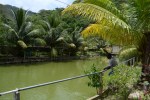
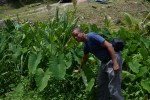
Arthur then proceeded to walk us around his farm, showing us one entrepreneurial endeavor after another.  The farm had everything from a full vegetable garden, tons of crazy tropical flowers, fruit trees (including the wonderful cacao and coffee), a tilapia pond, and a new church that looked out onto the beautiful rectangle of a fish pond.  Hallett said that most of these developments were new in the two years since he had been there last, showing the resolve that Arthur had for his projects.

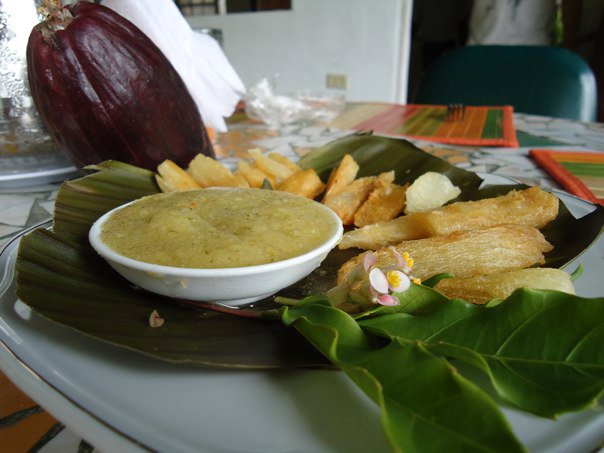
In an effort to save time and maintain readership, I will summarize lunch back at Mariposa via pictures and two words – fried yucca.  Mmmmmmmm.

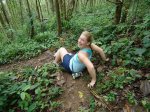
After the feast and a good tropical fast start / fast stop drencher of a rain storm, we were led on a nice little nature walk up the side of a mountain.  Keep in mind it had just rained when you see some of us slipping…  We went up back and forth via switchback foot trails surrounded by greens of as many shades as you can dream, tree seeds that look like dolphins once you carve the eyes, and lots of fauna that probably saw us far more than we saw them.  Point in fact, our first brush with the illustrious Bothrops asper.  For those not familiar with herpetological taxonomy, this would be the fantastically poisonous pit viper better known as a fer-de-lance.  I tended to stick to the back of packs when we were walking like this, mostly so I could assuage my fears that I would loose a student at some point on the trip (and judging by the pictures I’ve scavenged from the students, I maybe wasn’t that far off, I’m really glad that only about two people got hurt on the whole trip), so I was the last in line to pass a bowl in the rocks next to the trail.

We had been told about the snakes in this area ever so briefly, and mentioned that they do tend to like curling in crevices just like that one, so when I walked past it, I looked in.  Thankfully, I don’t have a picture (of this one…), because my choice was to pause and get out my camera, or keep walking and not risk getting lunged at.  It’s diamond patterned body was coiled nicely back in the whole, but I’m dead sure that I saw it’s triangular head with black eye stripes raised above as if to say “yes? what do you want?”.  Needless to say, I walked slightly more carefully (but also slightly faster) down the rest of the trail back to the cafe.

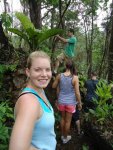
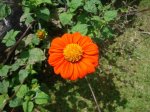
Ok, I’m fairly tired of writing at this point, and if you’ve made it this far, you’re probably tired of reading.  We did a few more things that day, specifically our inaugural game of penultimate frisbee, but that will have to come in the next post.  Thanks again to the students I’m stealing pictures from, (the labels on the picture files correspond to the initials of those who took the pictures, btws).  The flower pics from Lopinot this time around were from Chris, our resident plant hugger, and a lot of the walking / misc pics came from Abby and Brittaney.  I suppose I should introduce the students at some point…  Think there are some nice group shots from the next day, perhaps I’ll do it then.  But first, penultimate frisbee!

T&T – Buzzbirds, Lopinot, Theobroma cacao, and Bothrops asper (Part 1)

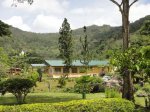
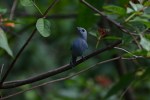
The third day of our adventure started yet again with a wonderful Pax breakfast, but this particular morning I explored the lower balcony and the appropriately named “Hummingbird Trail”.  As you would expect, I came down to breakfast most mornings with both my notebook, my semi-permanently borrowed Trinidad and Tobago bird book, and my camera (OK, I almost always had those three things with me…).  While the view from the upper terrace looked out onto both the city and some upper canopy up the mountain (there was a fantastic avocado tree with fruits just hanging over the railing so close to the tables that if they were ripe they’d basically be serving them selves to diners), the lower terrace looked into the chaotic world that is a tropical forest.  Pax puts out both hummingbird feeders and flat fruit feeders to attract birds, and birds there were a plenty.  In the brief time I had to sit and watch, I saw everything from tanagers, bananaquits, honeycreepers, buzzbirds (what I will call hummingbirds from now until forever), and lizards that could only be seen when they moved.  Needless to say, I liked it there.

When Eric pulled the bus up the driveway, I was forced to pull myself away from the endless wonders of the forest and move on to the new endless wonders of Lopinot.  As mentioned earlier, one of the previous waves of colonizers to come to Trinidad were the Spanish, but the French managed to have their say in the island’s history as well.  The valley in which Lopinot sits was colonized by the Spanish, while the town itself was built in the early 1800’s around a French cacao plantation established by the Compte (Count) de Loppinot, a French knight who had influence all over the “New World”.  A number of other groups influenced the diverse history of the village, including Indian newcomers freed from indentureship and a near by Spanish city whose inhabitants had the option of moving to Lopinot after their original city was flood in the 1940’s by the construction of a dam.  To make a 200 year long story short, Lopinot had a lot going on both historically and currently.

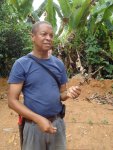
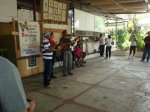
Our hosts during our time there were the wonderful folks at the Cafe Mariposa, specifically Arthur (pictured below), who would be our guide for the day.  To begin the experience, Arthur and a number of other people gathered around the group and sang us a welcoming song in the musical style parang (more on that in a bit) entitled “Consider Yourself One of Us”.  They continued to regale is with a few more songs, some in English and some in Spanish, all of which were fantastic, fun, and accompanied by maracas, which is always a good thing.  After we had a bit of an overview of the area’s history, Arthur walked us around the village and out to his farm.

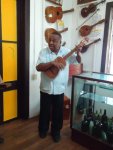
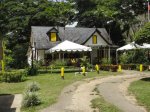
A lot of the original buildings have been preserved, including one currently housing a small museum.  We were given a wonderful history of the village and also of parang, the Spanish / Caribbean fusion musical style deeply rooted in the history of Lopinot.  Martin, the curator, gave us a demonstration of a number of the traditional instruments used in parang including a cuatro, a small four stringed instrument similar to a ukulele, maracas, and wood blocks.  Hypothetically, we were taught some different rhythms, given the maracas and wood blocks, and told to clap along to his expert singing and playing.  Even though our accompaniments were occasionally off, it was still great fun.  For a good example of parang in Lopinot, see this YouTube video. 

Martin also gave up a brief rundown of the plantation’s history of ghosts, including the Count himself, which can be seen in this convenient Ghost Hunters International episode, shot only months before we got there.  I haven’t watched it all yet (I think it might kind of suck a lot, and probably sensationalizes basically everything possible), but I recognize a lot of the people interviewed, all of whom couldn’t talk about what the Ghost Hunters team had found while we were visiting as the episode hadn’t aired yet.

For the ease of reading, I’ve broken this post up into two.  I do tend to be a bit long winded, my apologies, but the rest of the story is totally worth reading…

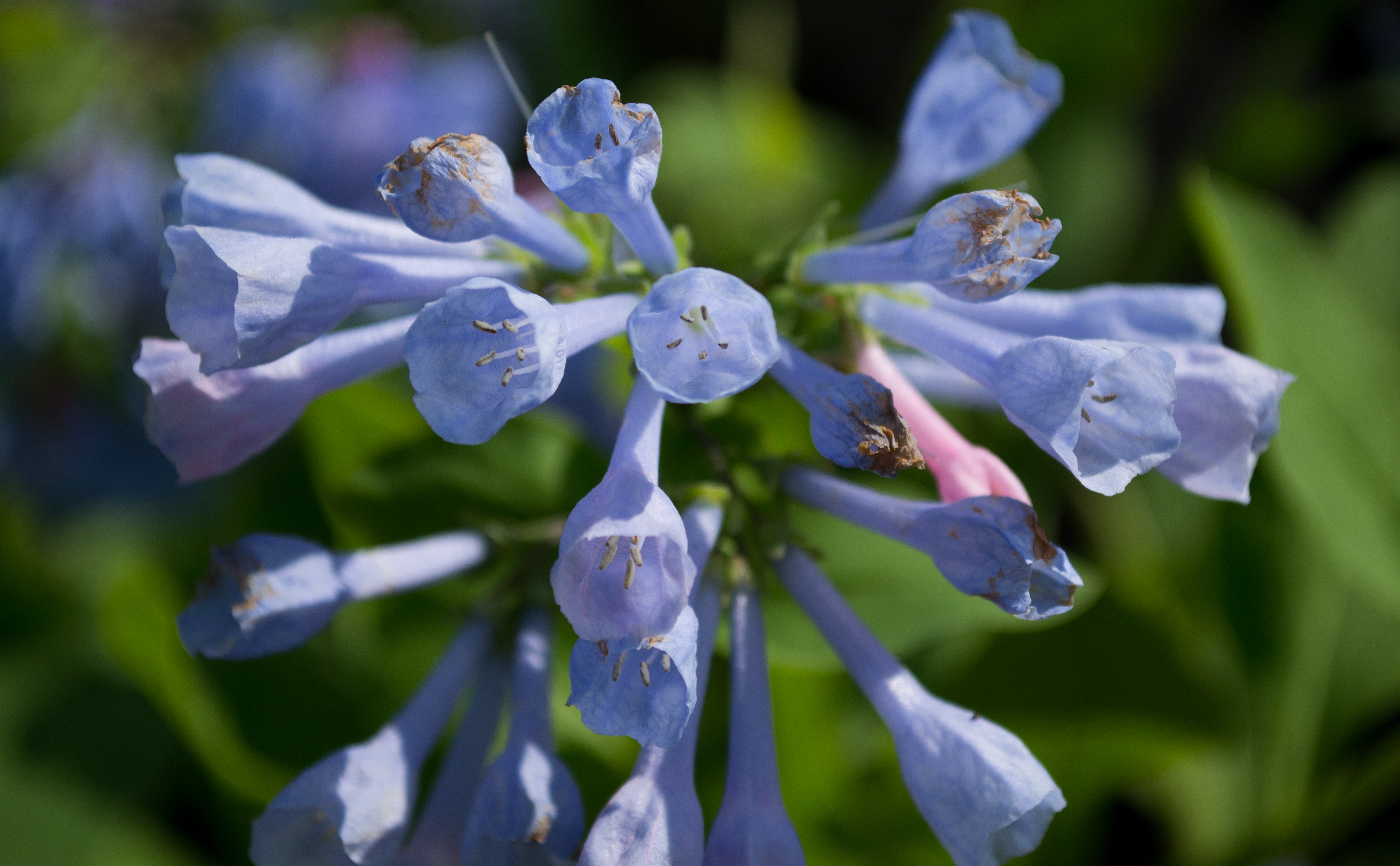
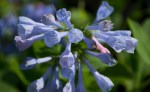
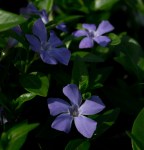
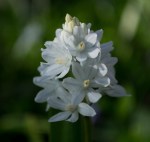
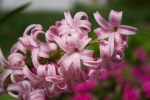
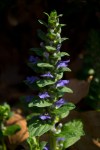
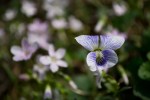
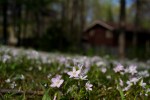
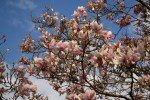
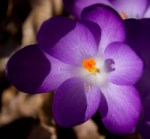
Spring has sprung into Pink and Purple and Blue!

Last week was yellow, this week the neighborhood has jumped to the other third of the color wheel that embraces the colors that I love the best in nature.  I mean, I get the reds, yellows, and green, but blues intrigue me.  I guess the pinks and purples are OK too.

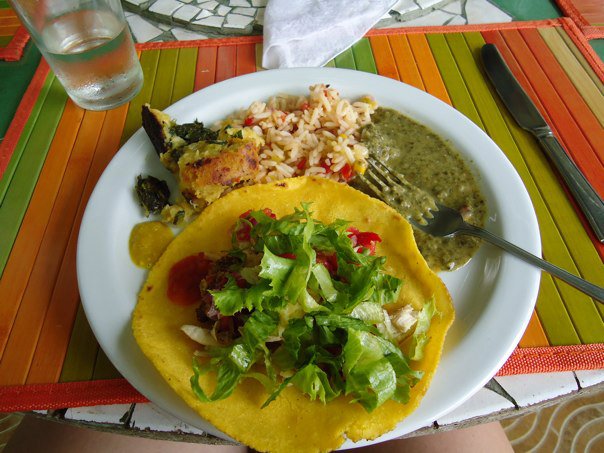
T&T – Trini Food, Part 1

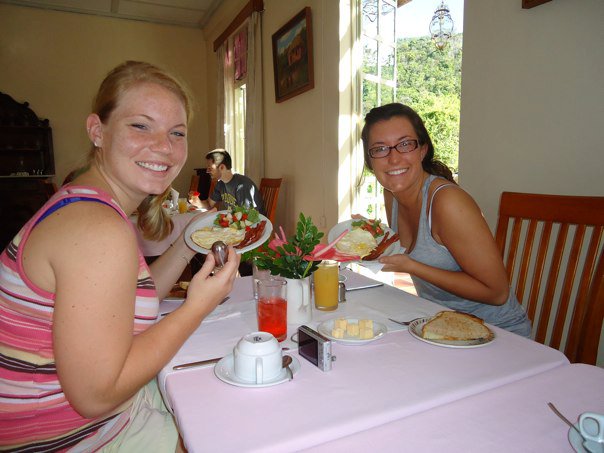
In the last few posts describing the first day, I intentionally omitted the discussion of food. I touched briefly on breakfast, and the surprise that awaited us in the dining room of Pax that morning, with subsequent variations on the same fruity theme greeting us each day we stayed at our home away from home (Chelsea and Brittaney seem happy with it, Chris seems like he’s still sleeping…). Breakfast was generally a constant that could be counted on to be relaxed and refreshing regardless of the excitement or shenanigans that occurred the day before. It involved familiar things, such as eggs and toast, mingled with some unfamiliar things, like salt fish and papaya. The bread at Pax, by the way, was hand crafted by the monks in the monastery just up the hill and was in itself superb, but when coupled with the variety of fruit spreads and jams that we had to choose from, became deliciously unique (many a piece was snagged from abandoned plates after students had gone back up to their rooms by the lingerers who stuck around for another cup of coffee and some bird watching before the start of the day).

This brings me to our first day time food adventure and our first encounter with the cultural combination that is all things Trini. To understand a lot of things in Trinidad, you have to remember that it has a history of colonialism by a number of European countries with trade in both commodities and people that reached halfway around the globe.  In short, these Caribbean islands hosted a native population that was mostly driven out or killed by first Spanish then British settlers, with each successive wave of trade and plantation establishment bringing a different set of workers to the islands.  The Spanish brought African slaves while the British brought Indian indentured servants.  The legacy of both groups of workers now defines the population that is roughly half of African and of Indian descent.  More recent history has involved emancipation and independence, further shaping the demographics of the cities versus the country side, but I’ll talk about that later.

What does any of this have to do with food, you ask?

Everything. The two main cultures that are represented in Trinidad are equally represented in the food, with tropical African dishes intermixed with Indian cuisine, making for a diverse and uniquely Caribbean menu.  Our first real experience with this mix was the lunch between the anthurium farm and Port of Spain, where Hallett herded us all into a fairly small, and very crowded, roti shop.  This was a cafeteria style quick food restaurant specializing in a combination of a flat, unleavened bread called a roti and different types of typical Indian chickpea or meat curries.  A variation on this is doubles, which are two pieces of flat fried bread called bara with channa in between.  Although a lot of the curry flavors were familiar, and chicken is pretty much chicken wherever you are, the dishes themselves were like nothing we had had before.

The act of us twelve whities waiting in line, blatantly not knowing what we were doing, was also quite an experience (this picture is neither roti nor doubles, I doubt any of us actually took a picture while we were in the restaurant, but it’s food from the next day, and was fantastic).  As “local whites”, those Trinidadians or Tobagonians that are of Caucasian descent, are fairly rare on the islands, we really stood out.  It was not uncommon for us to be pointed at, to have “hey, whities!” shouted at us, or to be talked about quietly (or not so quietly) as we went about the streets.  Although this attention was not familiar to us, it wasn’t particularly hostile or offensive, and became a running joke between the students.  I mean, we really did stand out no matter what we did, and Trinidad isn’t much of a tourist country with a deep history of colonialism.  Who’s to blame people from observing an obvious pack of foreigners?

Well, I haven’t even touched on the other meals at Pax, the famous Shark Bake, or the propensity for the hot Tropics to serve hot soup, but that will come later.  (Thanks again to Abby for the pics, I evidently took more pictures of birds than of food… and people…)

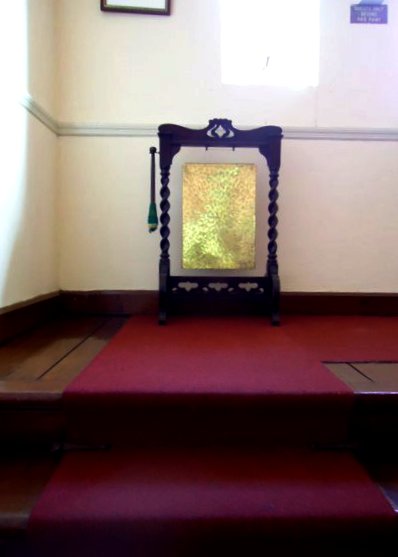
T&T – the Dinner Gong

Before I talk about Trinidadian food, I’d like to write a little ode to the Dinner Gong at Pax (thanks to Abby for the pic).  Each evening we spent at our home away from home, regardless of the crazy adventure that we’d had during the day, or how disgusting everyone was from hiking, swimming, penultimate frisbeeing, or general “learning”, we could solidly count on one thing; the Dinner Gong.

Since Trinidad sits about 10 degrees above the equator, with the day and night length at an almost even 12 and 12, the sun sets fairly consistently at about 6:30 or 7 pm year round.  As this nightly milestone approached, chances are most of us would be freshly showered and chilling on the veranda reading, writing, napping, right up until we heard that sweet sweet note that signaled dinner.  What followed the slow, rising escalation of sound was nothing short of a civilized stampede.  We weren’t juggling for the best seat, but the honor of being settled first and ushered by Gerard to start the queue for the delicious feast at hand.

Just think of the anticipation, the wait, the GOOONG, then the food.  Beautiful.

T&T – That was all in the first day?!

The saga continues –

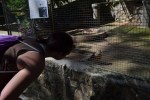
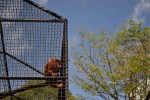
After another brief bout of rain (it was the tropics, that does tend to happen), we went through the country side past some interesting sites including Laventille, a slum I had read about in the Earl Lovelace book The Dragon Can’t Dance, back to Port of Spain to go to the zoo! I had heard many an intriguing story about broken cages and tigers that you could basically touch (then get mauled by), so my preconceived standards were fairly low. My first impression, however, was that the zoo was absolutely crowded, and it was a Sunday! It’s not that the place was that small, there was just a mass of families out to enjoy the day. The students split up and attempted to fit in with the crowds (well, to mingle at least, but we were still fantastically white after all and tended to stand out), and wandered around the paths. The cages were indeed small, with everything from monkeys to jungle cats to birds of prey stuck in pens so tight that some could hardly pace. The big raptors were especially trapped, maybe with one or two perches, a half empty dish of dirty water, and space to hop but not fly. Unfortunately, it probably wasn’t the worst zoo that I’ve ever been in, but the implications of the neglect allowed for by those running and those enjoying the zoo did make a lasting impression.

As is typical for trips such as these, we didn’t have much time to pause once we were done at the zoo (it wasn’t too hard for us to gather again, we just had to find the overly warm looking pale, about to be sunburned whities), but we did get a good show by a guy selling balloon animals to kids and couples alike. Eric managed to squeeze the bus in to the crowded driveway near the zoo, and we loaded up and were off again to Queens Park Savannah. Besides being surrounded by the worlds largest roundabout, the Savannah was basically a big park with football pitches, cricket fields, lots of lawn, and running paths all around. We pulled off to the side of the road and found the nearest coconut truck, which is exactly like what it sounds. For each student who was game, the vender chose a coconut from his collection, held it in one hand and wielded his machete with skilled abandon with his other to cut off the top of the nut to get at the milk. Some of the students were more impressed than others, but I understand that the coconut water is supposed to be incredibly refreshing. I was more impressed by the skill of the machete handling vender, who then cut the empty nuts in half, formed a spoon with part of the shell, and gave the halves back to the students so they could eat the gel remaining inside. Even if you’re not a fan of coconuts, it was fun to watch everyone’s different take on it, if nothing else.

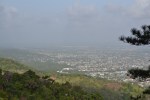
We returned to Pax with ample time still left in the day, so it was decided that we would hike the hill behind the guest house. Up the switchbacks we went to the trail that led to a watchtower and eventually the top. As we climbed, the trees changed from having a dense deciduous understory and canopy to a more open, evergreen feel. We could see flocks of Orange-winged Amazon parrots making their straight paths from one end of the sky to the other, always in nice little pairs. About two thirds of the way up, a few of us stopped to, I guess enjoy the view and chat about ecology, while the boys went the rest of the way to the top. We had been warned not to split up too much on these paths, as there had been an rash of robberies of late, so we figured two groups of about four people each was appropriate. As I chose to stay at the bench, the unique picture of our Illustrious Leader’s triumphant success blended with complete exhaustion was kindly taken by one of the students. Everyone made it back safe, despite Chase’s propensity to run down the narrow, rock filled paths (thus initiating the “trail name dubbing” portion of the trip to be discussed in future posts), and we were all rewarded with cool water and a seat on the veranda back at Pax when we got home.

Alas, we’ve yet again reached my bed time. I understand that the “blogosphere” is a place where time only exists once you press the “publish” button, but I would like to keep my goal of writing one of these a day, so the rest of the tale will come tomorrow. I will discuss the typical Pax dinner, what I mean by “dinner gong”, and the start of the following day’s adventure. Until then, I wish you pleasant dreams. I know mine will be.

Blog at WordPress.com.

Up ↑

Cedar to Hyssop

Reflections on adventures from Africa to Alaska

Artist Daniel Mackie, Artist behind The DM Collection

Exploring the animal kingdom from the perspective of art, folklore and mythology

Let's Paint Nature!

Christine's Sketchbook

Hanna Hasse Lilja

Swedish skull art

Civic Leaders Center

Located in Briscoe at Indiana University, the IU Civic Leaders Living-Learning Center is comprised of diverse students dedicated to leading for the greater good.

Little Nashushí

My Adventures in the Pacific Northwest

The Scrub Blog

Nature and Science from Florida's Heartland

this is... The Neighborhood

the Story within the Story

Nita Eats

savoring life bite x bite

MesAyah

Melodic hiphop meets deep reflections about life and death

Frank J Casella Photo Blog

Sharing photos and thoughts about hope and God's love in the world.

My Food And Flowers

Two of the Great Joys in Life!

A Good Blog is Hard to Find

I will shatter a word and scatter the contents into the wind to share it with the world.

Bucket List Publications

Indulge- Travel, Adventure, & New Experiences

stuart allan hyde

PHOTOGRAPHY