I do, because they’re awesome.

The technical definition of a swamp is really just a wetland that is dominated by woody plants. Nothing mystic, nothing scary, just a bit of water and a bunch of trees. Many people may assume that our jaunt to what would be the first of two swamps we would visit in Trinidad was not pleasant, filled with giant mosquito bites and snakes dangling from trees waiting to snatch up the smallest of the unsuspecting adventurers or such ilk. Reptiles tend to blend into the deep green and brown that permeates the dense vegetation that exist after the edge of the main water channels, so despite the estimated density of 11 tree boas per square kilometer found by these nutters who actually count that sort of thing, we didn’t see many snakes or caiman on this trip (not that they didn’t see us…). Those fears of swamp monsters and horror stories shown on TV don’t always apply to real life, and to be honest, there were more biting bugs at the beach than there were at the swamp. And anyway, I was more interested in the charismatic megafauna. You know, the birds.
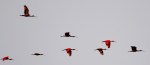
The Caroni Swamp sits on the west coast of Trinidad where the Caroni River empties into the Gulf of Paria, the body of water between Trinidad and Venezuela. This large patch of islands and water has been set aside for over 50 years in an effort to protect Trinidad’s national bird, the Scarlet Ibis. Conservation efforts such as this, which specifically stops Carnival costumes from being made from wild bird feathers and from tourists like us from tromping in willy nilly and scaring the crap out of the beasts, have boosted this population to between 10 and 30,000 individuals. That is what charismatic megafauna can do for a habitat. If something is rare but pretty, people care, habitats get preserved, and thus the species itself gets a boost. The charismatic character of this particular bird comes from its bright red plumage which is developed in similar manner to flamingos, via its diet of algae and crustaceans, but the birds in this particular region have one more striking aspect to their life. These bright birds migrate daily from Venezuela to Trinidad, making a spectacular group return to the swamp each evening.

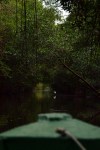
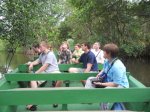
It is this sight that drives most of the ecotourism in the area, and this is that we had come to see. We got to the swamp about an hour before dusk and made our way to the wide boats and Winston Nanan, who would be our guide for both this and our second swamp tour later on. Winston and his son are very interesting people, with whom I’m very happy to have had the chance to meet, but I’ll get back to them when I talk about our adventures in Nariva. The boats took us into channels between islands cut into the swamp by both man and nature, weaving through the tight knots of vegetation that is typical of a mangrove swamp. The different types of mangrove shrubs (reds, whites, blacks, there’s over 100 species, so I’ll make this short) serve different functions in the swamps, from maintaining land and building new land, to providing habitat in both saline and fresh waters, all depending on the biology of the species.

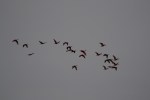
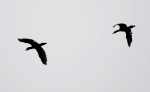
All this culminated in a spectacular collection of trees with an unceasing diversity of wildlife contained within. By dusk, our boats had been positioned on the opposite side of a large lagoon from a big roost holding thousands of birds making dots of pink, blue, and white against the dark green of the mangroves. The ibises came in Vs, with young and old sporting different patterns of pink and black, all with the signature long curved beaks that are so good for fishing shrimp out of the mud. Cormorants, herons, egrets, bitterns, and the ibises all made their way back to the roots for the night, in spectacular form, both visually and audibly (just like students, those buggers are noisy when you get a bunch together!).
 After we’d spent quite a bit of time sitting quietly so as to watch but not disturb the nature, we gently made our way back to the dock and then again back to Pax, hopefully with a different view of what the mystical “swamps” are all about.

































 what Was, what Is, and what Will Be